
Description
What is Knowledge?
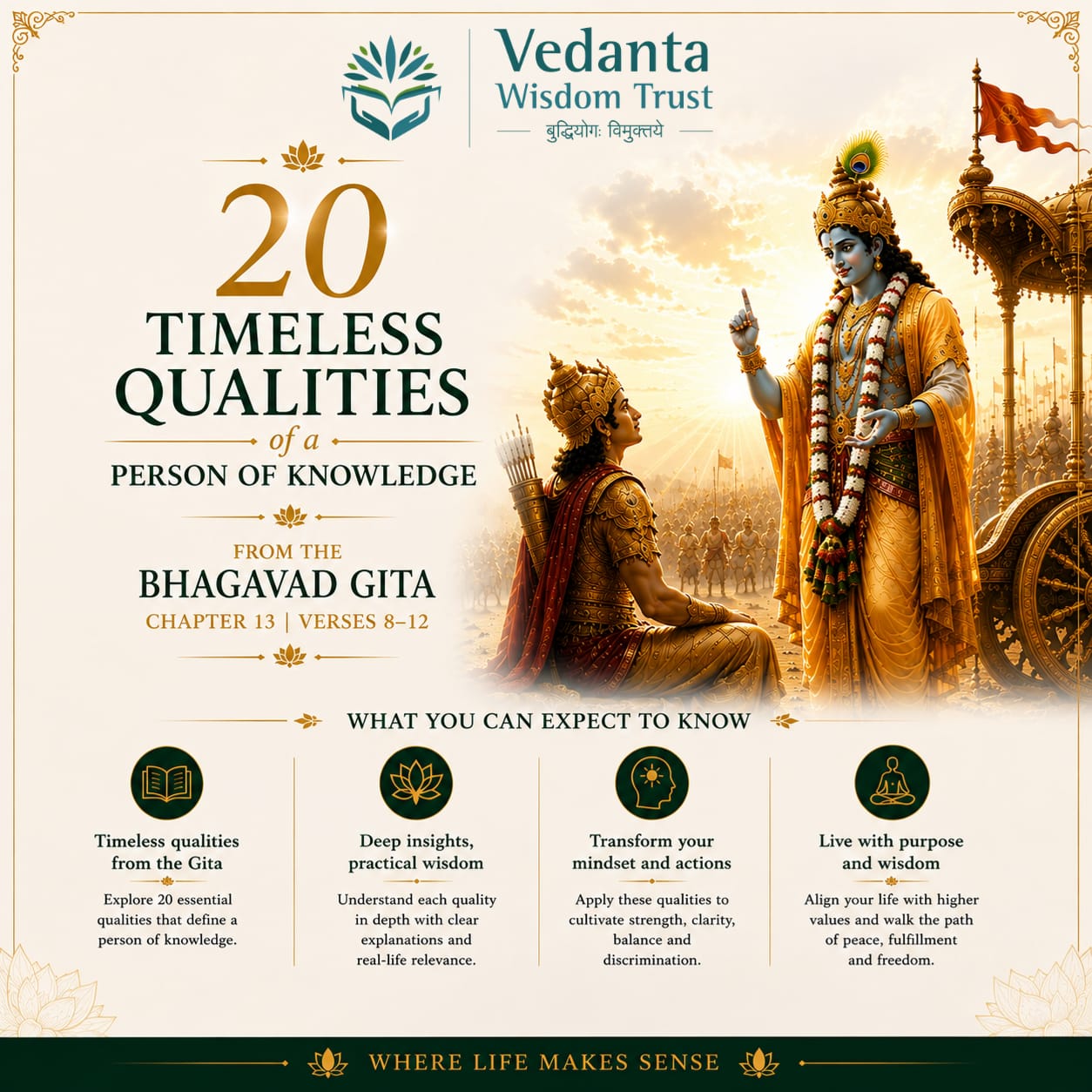
True wisdom isn’t just about what you know—it’s about how you live, react, and treat the world around you. In Chapter 13 of the Bhagavad Gita (verses 8–12), Lord Krishna defines Jnana (knowledge) not as raw intellect or academic degrees, but as 20 distinct transformational virtues. Everything outside these 20 traits, Krishna notes, is simply ignorance.
Today, most people treat knowledge as information gathered from the outside world. Krishna reverses this: true knowledge is an inner state of preparation.
Why It Is Important to Know These Qualities?
- Emotional Resilience: An agitated, ego-driven mind distorts reality. These 20 qualities purify the mind so that wisdom can actually be lived, not just memorized.
- Clarity of Thought: A disciplined intellect cuts through the emotional noise of likes, dislikes, and ego. When internal bias and mental agitations are eliminated, the mind sees reality with absolute, objective clarity.
- A Benchmark for Growth: They provide an objective framework to measure self-mastery, personal maturity, and emotional stability.
- Freedom from Suffering: By internalizing these virtues, you develop immunity to external chaos, anxiety, and relational conflict.
Who is this Course for?
This course is built for seekers, professionals, and students of philosophy who want more than conceptual theories. Whether you are navigating workplace stress, looking to deepen your spiritual practice, or searching for personal mastery, these 20 principles serve as a timeless blueprint for character, resilience, and true insight.
What are the 20 Qualities?
This course is a practical, deep-dive course designed to bridge ancient Vedantic philosophy with modern living. The following qualities are covered in detail in this course:
1. Amānitvam Humility
2. Adambhitvam Unpretentiousness
3. Ahiṁsā Harmlessness
4. Kṣāntiḥ Forgiveness
5. Ārjavam Uprightness
6. Ācāryopāsanām Service to the preceptor
7. Śaucam Purity
8. Sthairyam Steadfastness
9. Ātmavinigrahaḥ Self-control
10. Indriyārtheṣu vairāgyam Dispassion towards sense objects
11. Anahaṅkāraḥ Absence of egoism
12. Janmamṛtyuḥ jarāvyādhiḥ duḥkhaḥ doṣānudarśanam Perception of pain and evil of birth, death, old age and disease
13. Asaktiḥ Non-attachment
14. Anabhiṣvaṅgaḥ putradāragṛhādiṣuḥ Non-infatuation with son, wife, home, etc.
15. Nityam samacittatvam iṣṭāniṣṭopapattiṣu Constant balance of mind in desirable and undesirable happenings
16. Mayi ananyayogena bhaktiravyabhicāriṇī Unswerving devotion to Me by steadfast yoga
17. Viviktadeśasevitvam Resorting to solitary place
18. Aratiḥ janasaṁsadi Distaste for crowd of people
19. Adhyātmajñānanityatvam Constancy in Self-knowledge
20. Tattvajñānārthadarśanam Perception of the end of true knowledge